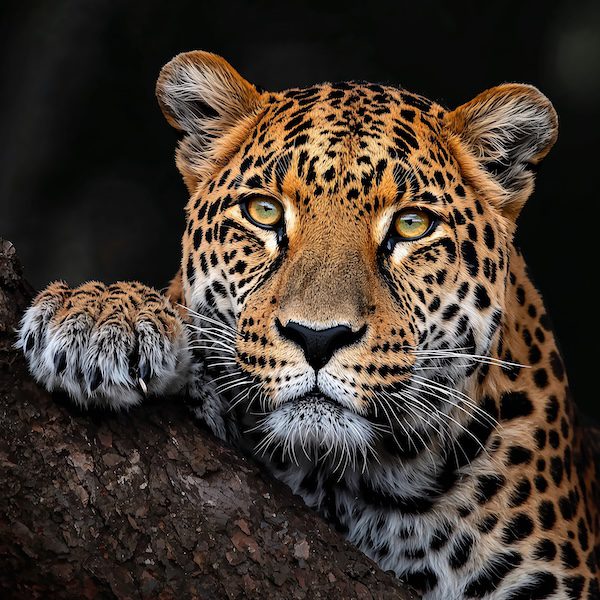
Anatomy & Physiology
We are often asked: How do we know the way these animals see? There are many ways.
Anatomy & Physiology:
Retinal Analysis: Examining the retina under a microscope to count rods (low light) and cones (color) and identify opsins, the light-sensitive proteins.
Microspectrophotometry: Analyzing pigments in cells to determine how they respond to different light wavelengths.
Genetic Study: Looking at genes for opsins to infer light sensitivity.
Behavioral Studies:
Discrimination Tests: Training animals (like dogs or birds) to pick a specific colored item for a reward, revealing which colors they can differentiate.
Movement Perception Tests: Assessing how well they track moving targets from different distances.
Technological Modeling:
Quantitative Color Pattern Analysis (QCPA): A framework that analyzes visual data to model what patterns and colors look like to different species.
Video Analysis: New techniques record and analyze visual information to create simulations of animal vision.